
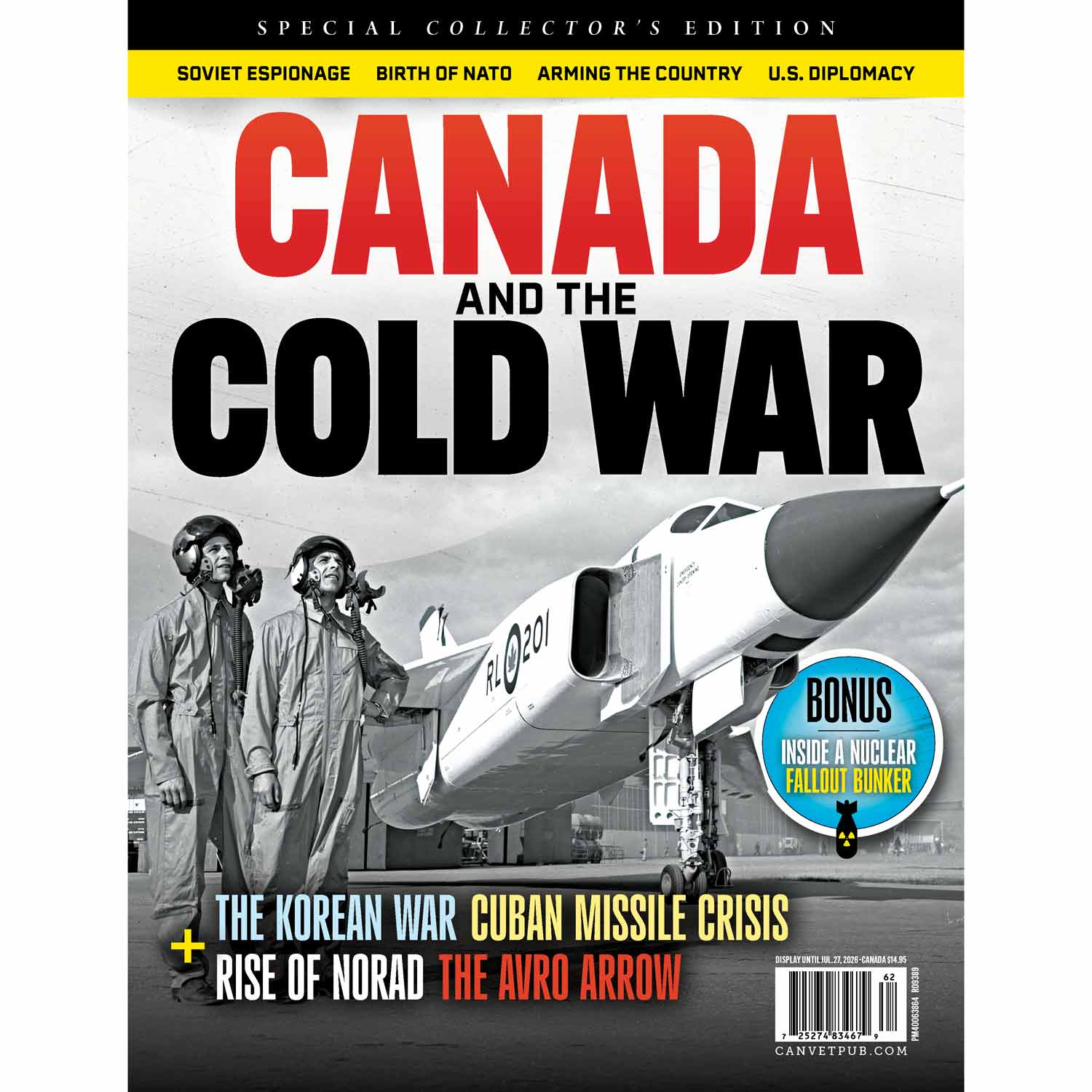
Canada and the Cold War
$14.95
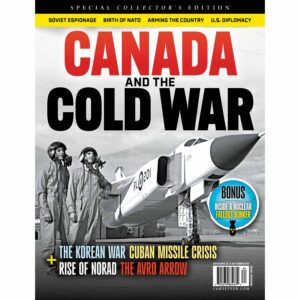
The Cold War pitted capitalism against communism. It saw the creation of political-military alliances and attempts to influence neutral states with aid, bribery and propaganda. There were nuclear weapons and plans to employ them or control their use. Spies from each side searched for secrets. And amid this, Canada was a player, finding itself under the flight path for nuclear-armed bombers and missiles from the U.S.S.R., stationing troops overseas with NATO and peacekeeping abroad.
The Cold War pitted capitalism against communism. It saw the creation of political-military alliances and attempts to influence neutral states with aid, bribery and propaganda. There were nuclear weapons and plans to employ them or control their use. Spies from each side searched for secrets. And amid this, Canada was a player, finding itself under the flight path for nuclear-armed bombers and missiles from the U.S.S.R., stationing troops overseas with NATO and peacekeeping abroad.
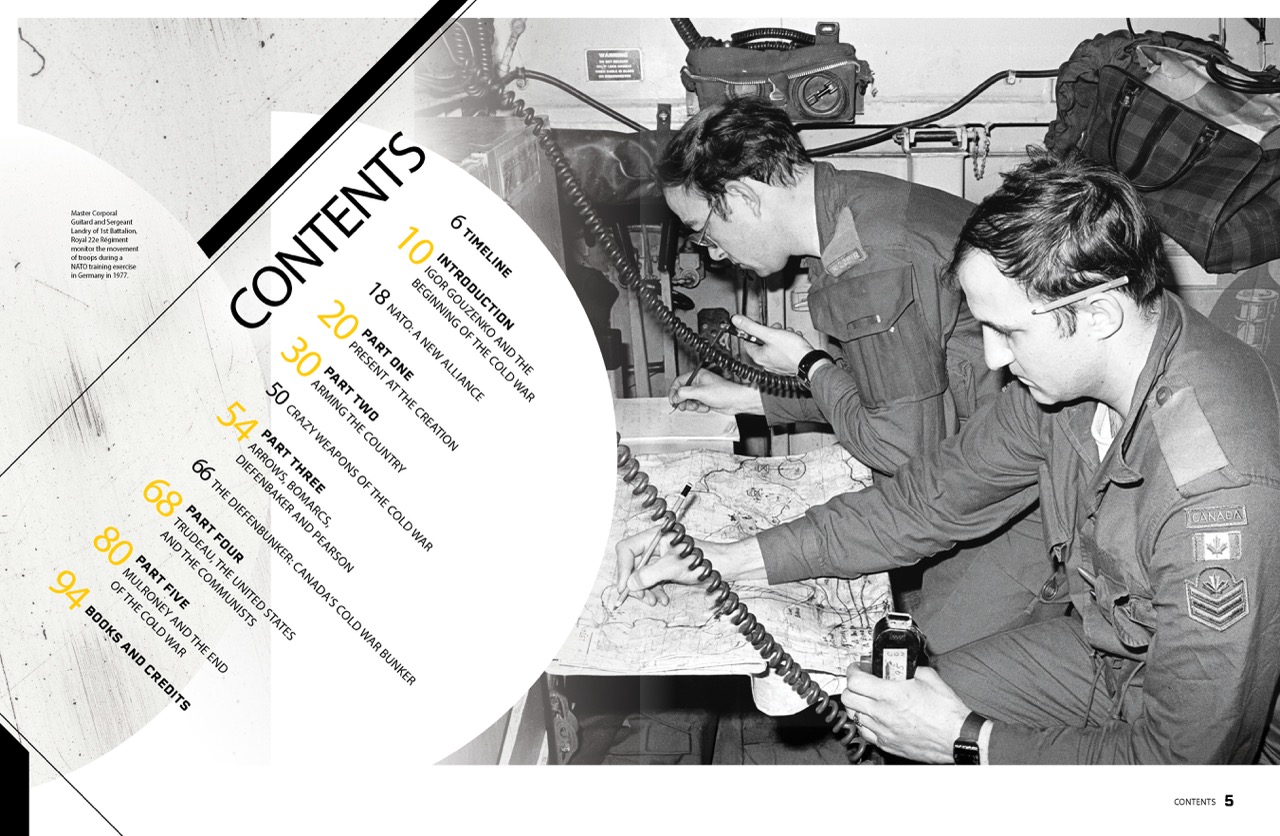
Chapter summaries
Canada and the Cold War
By J. L. Granatstein
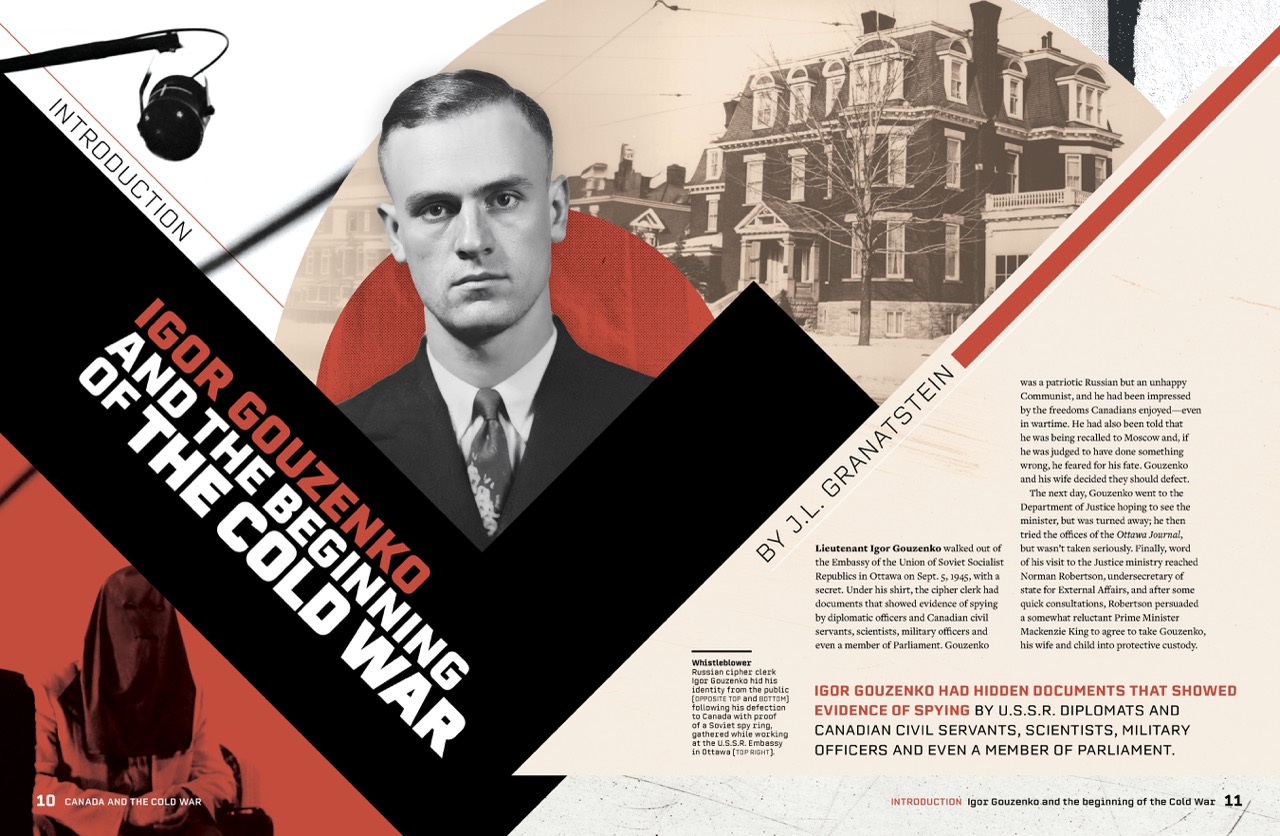
Introduction
Igor Gouzenko and the beginning of the Cold War
Mere weeks after the Second World War ended, Lieutenant Igor Gouzenko walked out of the U.S.S.R. embassy in Ottawa with evidence of Soviet spying in Canada. The revelations from Gouzenko’s documents plunged the world into the Cold War, a conflict that didn’t end until the collapse of the Soviet Union in 1991.
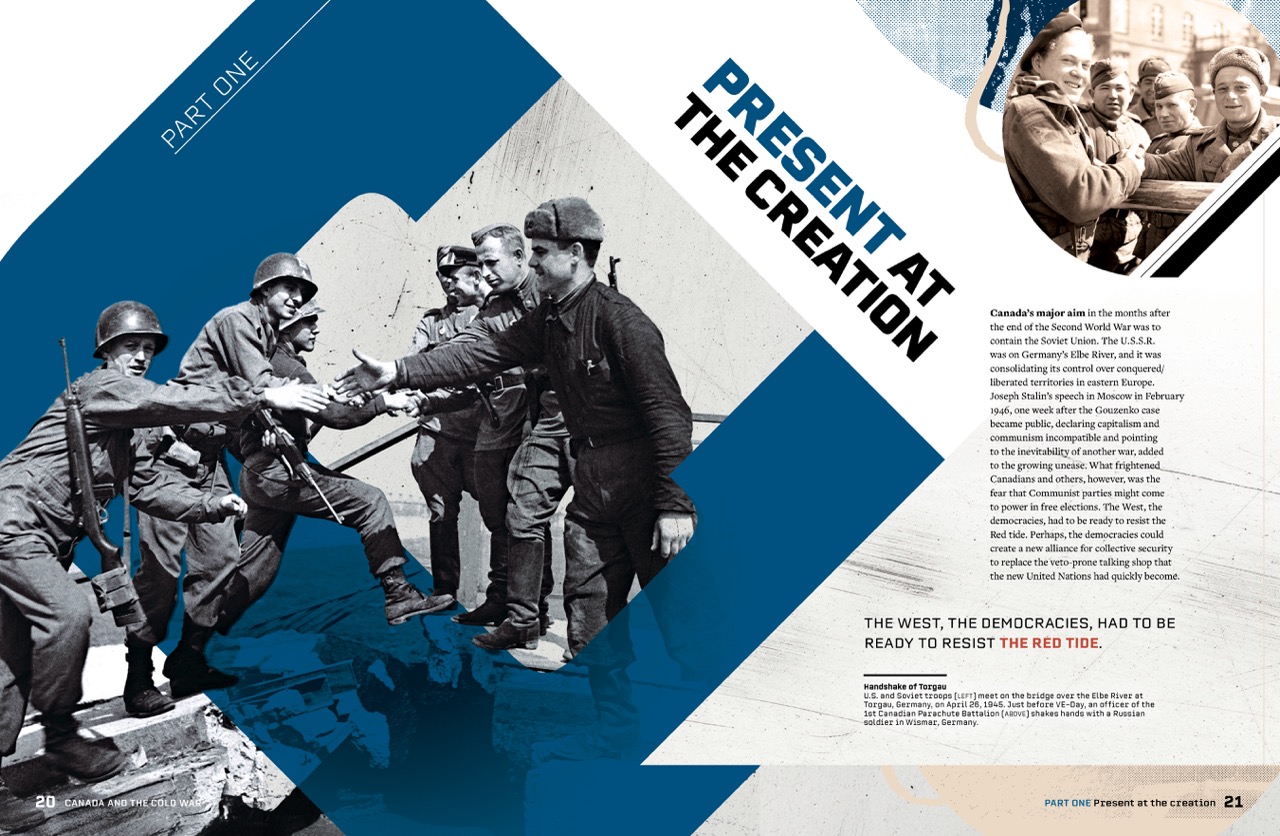
Part 1
Present at the creation
Canada’s major aim in the months after the end of the Second World War was to contain the Soviet Union. It supported forming an alliance for collective defence against the U.S.S.R.—NATO was born.
Part 2
Arming the country
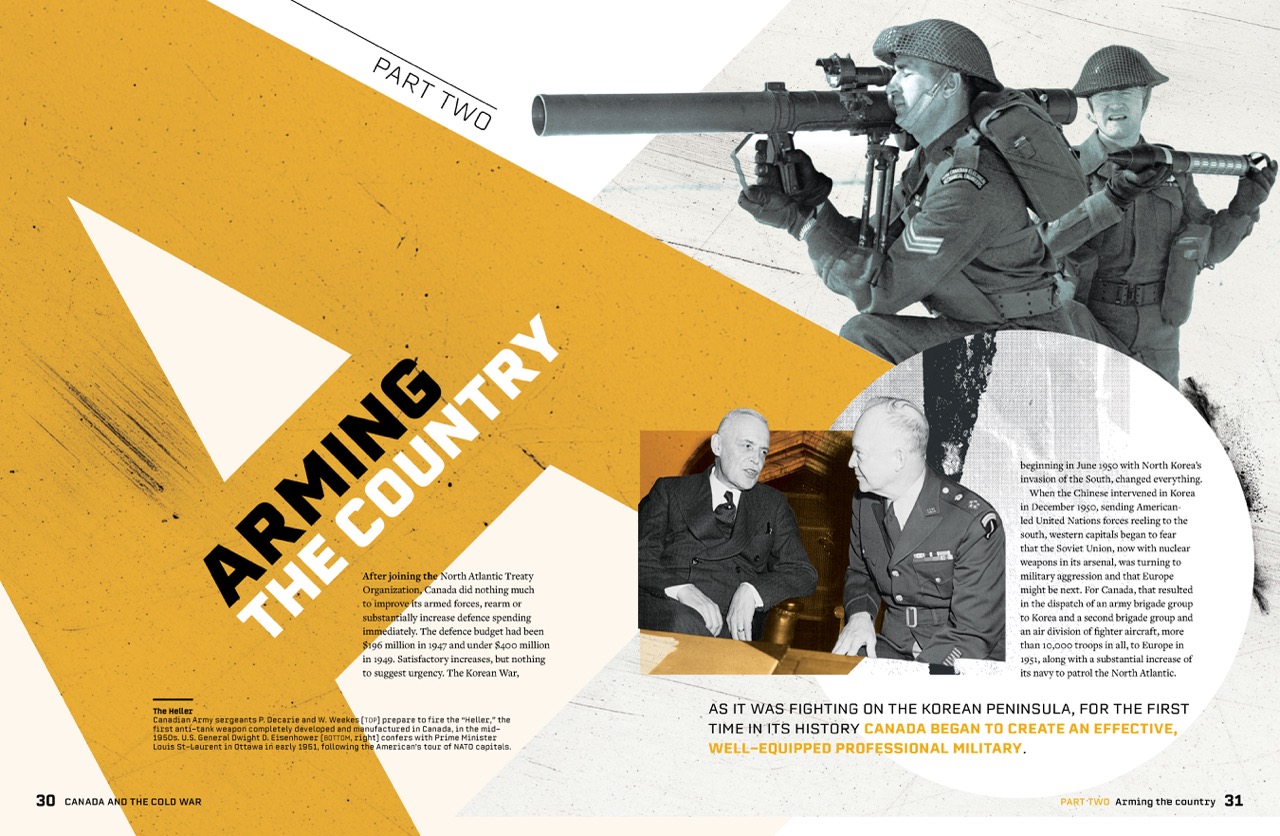
As it was fighting the Korean War, for the first time in its history Canada began to create effective, well-equipped professional forces. The 1950s became the golden age of the postwar Canadian military.
Part 3
Arrows, Bomarcs, Diefenbaker and Pearson
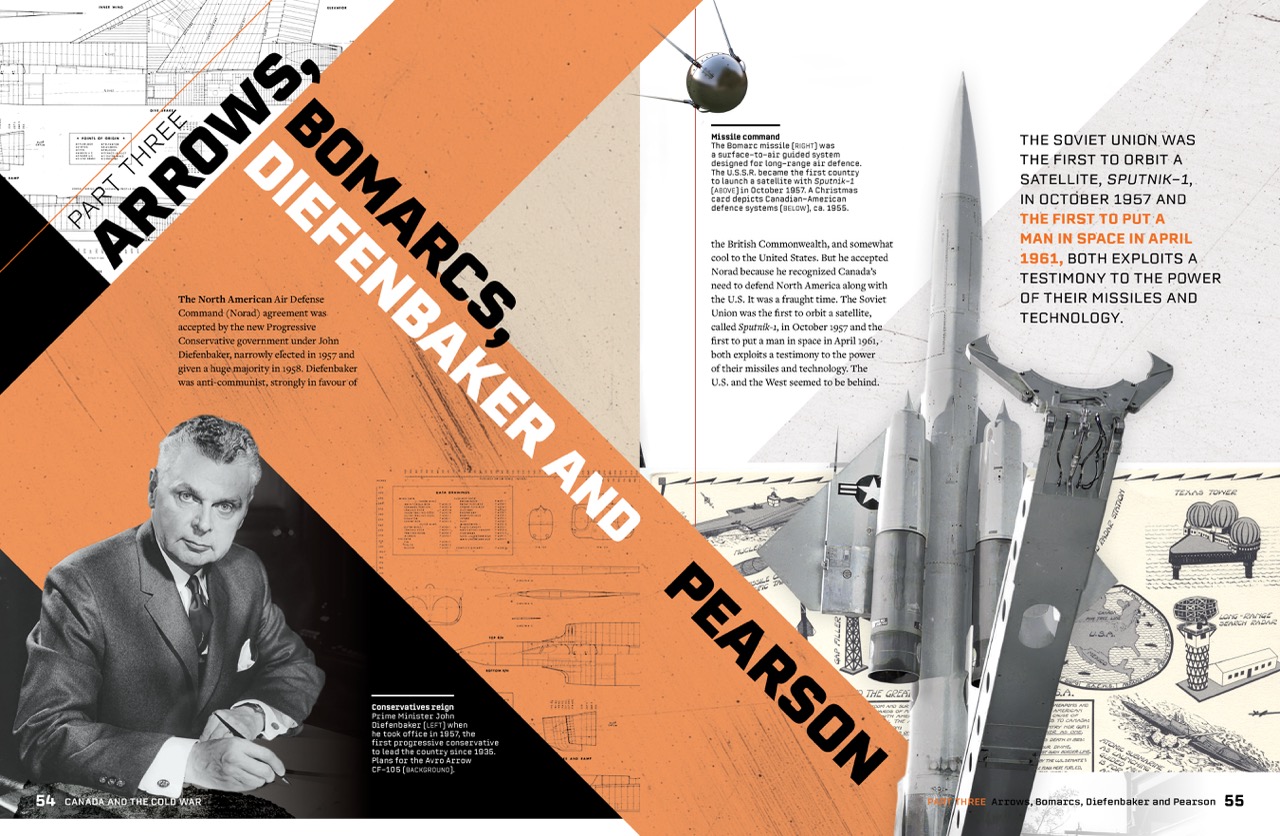
The Soviet Union looked to be winning the space race, orbiting the first satellite in October 1957 and putting the first man in space in April 1961. Meanwhile, Diefenbaker pulled the plug on the Avro Arrow, and the Cuban Missile Crisis came close to starting a nuclear war.
Part 4
Trudeau, the United States and the communists
By the late 1960s, Canadians wanted butter, not guns. Trudeau epitomized the growing feeling in Canada that the Cold War had lasted too long and had distorted priorities. Relations with the U.S. were strained.
Part 5
Mulroney and the end of the Cold War
Prime Minister Brian Mulroney rekindled the Canada-U.S. relationship. The fall of the Berlin Wall in November 1989 marked the beginning of the end of Soviet domination in eastern Europe and soon, of the U.S.S.R. itself. The Cold War was effectively over.
| Weight | 450 g |
|---|---|
| Dimensions | 30 × 23 × 0.8 cm |
| Collection |

Reviews
There are no reviews yet.